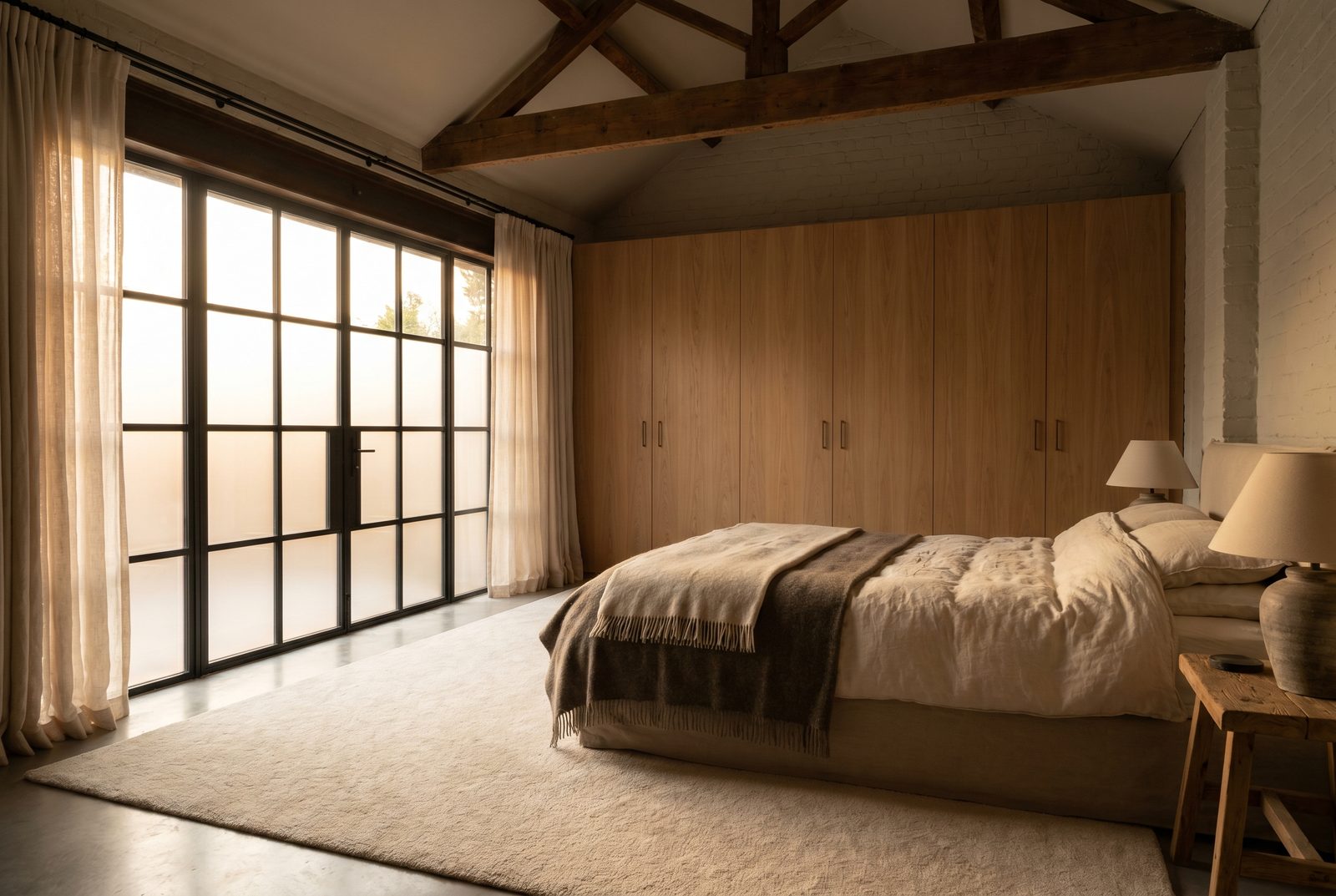
Converting a Garage into a Bedroom: Costs, Planning & How-To
Turning a garage into a bedroom costs roughly £8,000–£20,000 in North London. The full how-to: planning, building regs, insulation, damp and process.
Last updated: June 2026 · Verified against current government planning rules and North London council records.
How do I convert a garage into a bedroom?
Quick answer: Converting a garage into a bedroom costs roughly £8,000–£20,000 in North London and is usually permitted development, though a parking condition or Article 4 direction can require planning permission. Building regulations always apply, covering the raised insulated floor, wall and roof insulation, damp-proofing, ventilation and a window for escape.
An integral garage is often the cheapest square footage you will ever add to a home, because the walls and roof are already there. Turning it into a bedroom is one of the most popular conversions in North London for exactly that reason. But "cheap" does not mean "simple" — a bedroom must be warm, dry, ventilated and safe to sleep in, which is precisely what the building regulations enforce. This guide covers the costs, the approvals and the step-by-step process.
What does converting a garage into a bedroom cost?
Cost depends on the garage's condition, whether you add an en-suite, and the finish level. The table breaks down a typical North London single-garage-to-bedroom conversion.
| Element | Typical cost |
|---|---|
| Raised, insulated, damp-proofed floor | £1,500–£3,000 |
| Replacing garage door with insulated wall and window | £1,500–£3,000 |
| Wall and roof insulation and plasterboard | £2,000–£4,000 |
| Electrics, heating and second fix | £1,500–£3,000 |
| Plastering, flooring and decoration | £1,500–£3,500 |
| Building control sign-off | £500–£1,500 |
| Optional en-suite | £3,000–£6,000 |
A straightforward bedroom conversion without an en-suite typically lands around £8,000–£15,000; add an en-suite and £15,000–£20,000 is realistic. It remains far cheaper per square metre than a loft or extension because no new structure is built.
Do I need planning permission to make a garage a bedroom?
Usually not. Converting an integral garage internally is generally permitted development, since the footprint does not change. The two exceptions to check are a parking condition in your home's original planning permission, which requires you to apply to vary it, and an Article 4 direction on your street, which removes permitted development rights. If either applies, a householder planning application costs £548 (April 2026), plus £91.02 to the Planning Portal unless you pay the council directly. A Lawful Development Certificate at £274 is worth obtaining either way to confirm the conversion is lawful for future buyers.
Why do building regulations matter so much for a bedroom?
Because a bedroom carries stricter requirements than a study or utility — people sleep there, so fire escape and ventilation are critical. Building regulations always apply and cover: a floor raised above the old garage slab, insulated and fitted with a damp-proof membrane; walls and roof insulated to current thermal standards (garage walls are often single-skin and need upgrading); adequate ventilation; and a window large enough to serve as an emergency escape, since a habitable bedroom needs a means of escape. Building control inspects each stage and issues the completion certificate that makes the room a legal bedroom. Without it, the room cannot be counted as a bedroom when you sell.
What is the step-by-step process?
The sequence is consistent. First, check your planning conditions and Article 4 status, and apply to vary any parking condition if needed. Second, design the room and lodge a building control application. Third, on site: the garage door comes out and is replaced with an insulated wall and window; the floor is raised, insulated and damp-proofed; walls and roof are insulated and plasterboarded; first-fix electrics and heating go in; then plastering, flooring and decoration. Building control inspects at key stages. The build itself is quick — often 3–5 weeks — because there is no foundation or new structure. Damp control is the technical priority throughout, since garages were never built to keep a sleeping room dry.
Frequently asked questions
Is a converted garage warm enough to be a bedroom?
Yes, once properly insulated. Garage walls are often single-skin and the floor uninsulated, so building regulations require both to be upgraded to current thermal standards. A correctly converted garage bedroom is as warm as any other room in the house — the insulation is precisely what the regs enforce.
Do I need a window for the garage bedroom?
Yes. A habitable bedroom requires a means of escape, which usually means a window of a minimum openable size positioned for emergency egress. This is one reason the garage door is replaced with a wall containing a properly sized window rather than just blocked up.
Will converting my garage affect my home insurance or value?
A properly certified conversion adds a usable bedroom and typically increases value, provided you do not lose essential parking on a street where it is scarce. Tell your insurer about the change of use. An uncertified conversion can reduce value because it cannot be sold as a legal bedroom.
How long does a garage-to-bedroom conversion take?
The on-site work is usually quick at around 3–5 weeks, since there is no new foundation or structure. Add design and building control lead time, and the full process from decision to finished room often runs 6–8 weeks, longer if a parking condition must be varied first.
A garage bedroom is one of the best-value rooms you can add, as long as the damp and insulation are done properly. Our garage conversions hub covers the detail, or book a free site visit and we will price your conversion fixed and check your planning conditions — The Extension Company, Cockfosters, 020 3051 9430.
Related service
Garage ConversionsMost garage conversions need no planning permission — we verify with your council first.
Thinking about your own extension?
Design yours in the Extension Builder for an honest guide price in 60 seconds — no email needed — or book a free site visit for a fixed, itemised quote from the Pine Grove team.
Or call us — 020 3051 9430
The London extension breakdown, in your inbox
One thoughtful piece a week on what extensions actually cost in London, what councils are approving, and the mistakes worth avoiding. No fluff, no spam, unsubscribe in one click.
We'll only email you about London extensions. Unsubscribe any time.
Explore More House Extension Design Options
Related Articles
Most garage conversions are permitted development — but parking conditions and Article 4 zones can require permission. Building regs always apply.
Convert your garage into valuable living space in London. Learn about garage conversion costs, planning rules, and how to turn underutilised garages into functional rooms.
Most garden rooms are permitted development if single-storey, under 2.5m at the eaves, and not used for sleeping. The exact 2026 limits explained.
Ready to Get Started?
Henry Lewis
Henry Lewis covers UK home extensions, planning permission, and renovation for The Extension Company. He has spent the last decade writing about property and the British housing stock, with a particular focus on how London homeowners navigate the planning system and get the most from their builds.