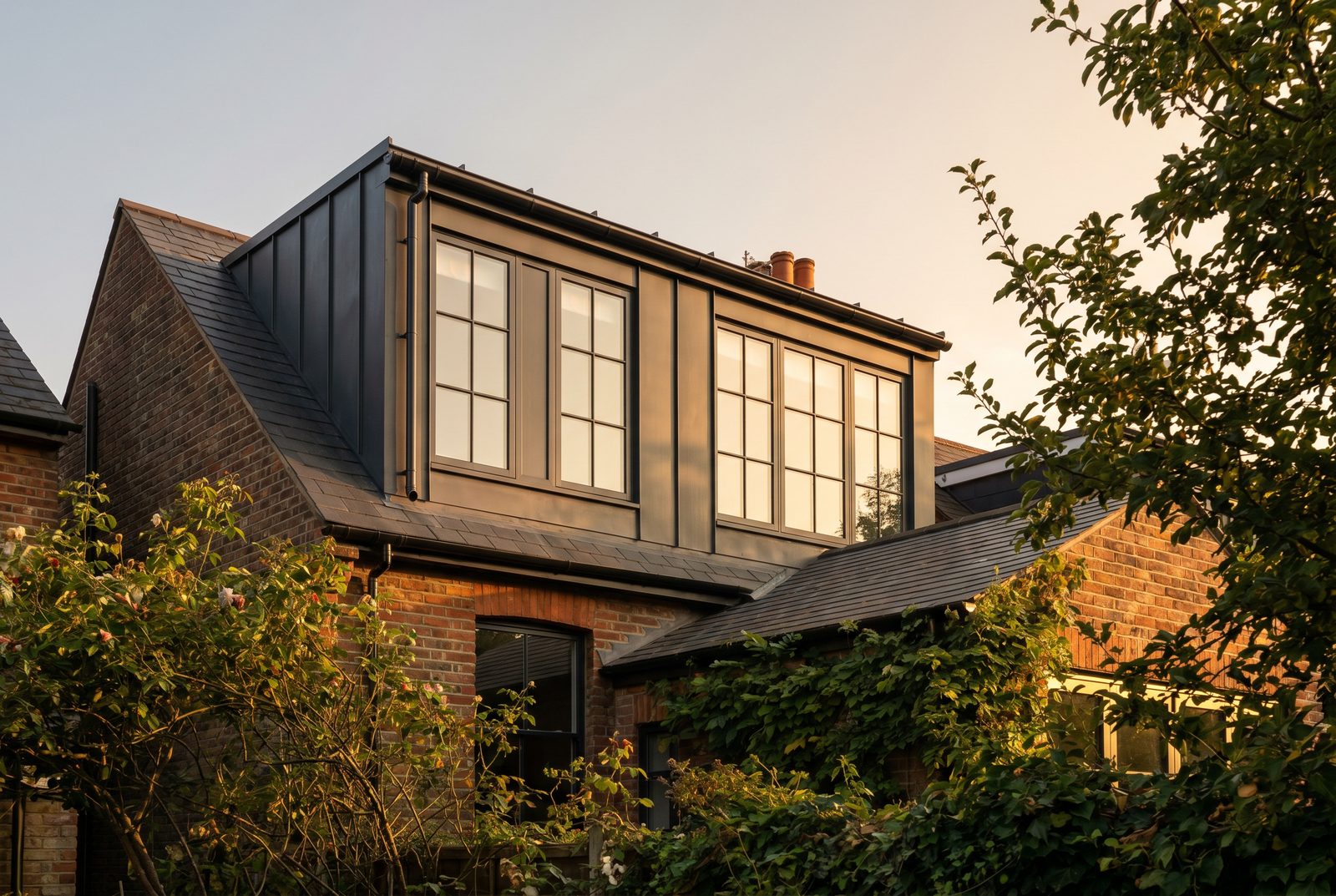
Do You Need Planning Permission for a Dormer?
Rear dormers are usually permitted development; front dormers almost always need permission. The 2026 rules, volume limits and conservation restrictions.
Last updated: June 2026 · Verified against current government planning rules and North London council records.
Do you need planning permission for a dormer?
Quick answer: A rear dormer is usually permitted development and needs no planning permission, provided it stays within your roof volume allowance — 40m³ on a terrace, 50m³ on a semi or detached — and sits behind the principal elevation. A front dormer almost always needs planning permission, and conservation areas restrict both.
The dormer is the workhorse of North London loft conversions, projecting from the roof to create full-height usable space. The planning question hinges almost entirely on one thing: which way it faces. Rear dormers, tucked behind the house, generally sail through under permitted development. Front dormers, visible from the street, almost always need an application. Add the volume limits and conservation rules, and you have the full picture. Here is exactly when a dormer needs permission in 2026.
Why are rear dormers usually permitted development?
Because they sit behind the principal elevation — the main, street-facing face of the house — where permitted development allows roof additions. A rear dormer grows the roof at the back, out of public view, which is precisely the kind of subordinate addition the permitted development rules permit. To qualify, it must stay within your house's roof volume allowance, not raise the height above the existing ridge, use materials similar to the existing roof, and keep any side-facing windows obscure-glazed and non-opening below 1.7m. Meet those conditions and a rear dormer needs no planning application — which is why the overwhelming majority of North London dormer conversions proceed under permitted development.
When does a dormer need planning permission?
The table sets out the triggers that take a dormer outside permitted development.
| Trigger | Effect on the dormer |
|---|---|
| Front-facing (forward of the principal elevation) | Almost always needs planning permission |
| Exceeds 40m³ (terrace) or 50m³ (semi/detached) | Volume over the cap requires an application |
| Conservation area | Rear dormers often lose PD rights; permission usually required |
| Article 4 direction | Council has withdrawn dormer PD rights on the street |
| Raises the roof above the existing ridge height | Outside PD; needs permission |
| On a flat, maisonette or listed building | PD does not apply; permission (and listed consent) needed |
The front-facing rule is the decisive one. A dormer on the street-side roof slope is visible from the public realm and is therefore excluded from permitted development almost everywhere, so a front dormer should be assumed to need an application from the outset.
How does the volume limit affect a dormer?
Every dormer eats into your roof volume allowance, and that allowance is cumulative for the life of the house. A terrace has 40m³ to play with; a semi or detached house has 50m³. A generous rear dormer on a London terrace can consume 25–35m³ on its own, which leaves little room if a previous owner already added roof volume. If the dormer pushes the total over the cap, it needs planning permission even though it faces the rear. This is why measuring the proposed volume early matters — a dormer that looks like obvious permitted development can quietly breach the limit once the box and cheeks are counted. Note the older 20m³ allowance some guides cite no longer applies; the current figures are 40m³ and 50m³.
What about dormers in conservation areas?
Conservation areas change everything. In a designated conservation area, permitted development rights for roof alterations including rear dormers are frequently restricted or removed, because the council protects the consistency of rooflines and the character of the street. A rear dormer that would be straightforward permitted development elsewhere typically needs planning permission inside a conservation area, and the council may resist bulky or prominent designs. Article 4 directions have the same effect on specific streets. Roughly a quarter of North London streets carry one of these constraints, so checking your address against the council's conservation and Article 4 records is essential before designing any dormer. Whatever the planning position, a dormer always needs building regulations approval, typically £500–£1,500.
Frequently asked questions
Can I build a front dormer without planning permission?
Almost never. A front dormer sits forward of the principal elevation and is visible from the street, which places it outside permitted development in nearly all cases. You should assume a front dormer requires a full planning application and design accordingly from the start.
How big can a rear dormer be under permitted development?
There is no fixed dimension, only the volume cap — 40m³ on a terrace or 50m³ on a semi or detached house, cumulative across the building's history. The dormer must also stay below the existing ridge height and behind the principal elevation. Within those bounds, a sizeable rear dormer is permissible.
Does a dormer in a conservation area always need permission?
Usually, yes. Conservation areas commonly have permitted development rights for roof alterations restricted or removed, so even a rear dormer typically needs planning permission there. The council scrutinises design to protect the streetscape, so early consultation and a sympathetic design help.
Do I need building regulations for a dormer?
Always. Regardless of whether the dormer needs planning permission, building regulations approval is required for the structural work, insulation, fire safety and the loft conversion it serves. Building control inspects the work and issues a completion certificate, typically costing £500–£1,500 for the conversion.
Whether your dormer needs permission comes down to which way it faces and which street you are on. Our loft conversions hub explains the dormer rules in full, or book a free site visit and we will check your volume allowance and conservation status before designing — The Extension Company, Cockfosters, 020 3051 9430.
Related service
Planning Fees ExplainedEvery 2026 planning fee for extensions, verified against the current Planning Portal schedule.
Thinking about your own extension?
Design yours in the Extension Builder for an honest guide price in 60 seconds — no email needed — or book a free site visit for a fixed, itemised quote from the Pine Grove team.
Or call us — 020 3051 9430
The London extension breakdown, in your inbox
One thoughtful piece a week on what extensions actually cost in London, what councils are approving, and the mistakes worth avoiding. No fluff, no spam, unsubscribe in one click.
We'll only email you about London extensions. Unsubscribe any time.
Explore More House Extension Design Options
Related Articles
Most North London loft conversions are permitted development and need no application — but conservation areas and Article 4 zones change everything.
Most extensions built "without planning permission" are perfectly lawful — that is what permitted development is. Here is what happens when a project falls outside it, and how to fix unauthorised work properly.
No special planning category exists for conservatories — the same permitted development rules as any rear extension apply, so most need no application. The real catch is building regs and the open-plan trap.
Ready to Get Started?
Henry Lewis
Henry Lewis covers UK home extensions, planning permission, and renovation for The Extension Company. He has spent the last decade writing about property and the British housing stock, with a particular focus on how London homeowners navigate the planning system and get the most from their builds.