How Long Does a Loft Conversion Take?
A loft conversion takes 6–10 weeks on site, but the full journey from design to finished room runs longer. The stage-by-stage North London timeline.
Last updated: June 2026 · Verified against current government planning rules and North London council records.
How long does a loft conversion take?
Quick answer: Most loft conversions take 6–10 weeks of on-site building work. Counting design, structural calculations, building control and any planning or party wall steps, the full journey from first call to finished room usually runs 3–5 months in North London. The build itself is the shortest part.
"How long will it take?" is the question every homeowner asks second, right after cost. The construction phase — the noisy, disruptive bit — is genuinely quick at 6–10 weeks for a standard dormer or hip-to-gable. But the on-site weeks sit inside a longer process of design, approvals and lead times, and underestimating that front end is how people end up frustrated. Below is a realistic stage-by-stage timeline so you can plan the whole thing rather than just the building.
What is the full loft conversion timeline, stage by stage?
The table maps the typical North London journey. Stages overlap in practice — design and structural work can run alongside a Lawful Development Certificate application — so the total is shorter than adding every row.
| Stage | Typical duration |
|---|---|
| Design and drawings | 2–4 weeks |
| Structural engineer's calculations | 1–2 weeks |
| Lawful Development Certificate or planning (if needed) | 4–8 weeks |
| Party wall notices and agreement (if needed) | 2–6 weeks (longer if disputed) |
| Building control application | 1–2 weeks to lodge, inspections throughout build |
| On-site construction | 6–10 weeks |
For a permitted-development dormer with consenting neighbours, the whole thing can complete inside three months. Add a planning application or a party wall dispute and four to five months is realistic.
What happens during the 6–10 weeks on site?
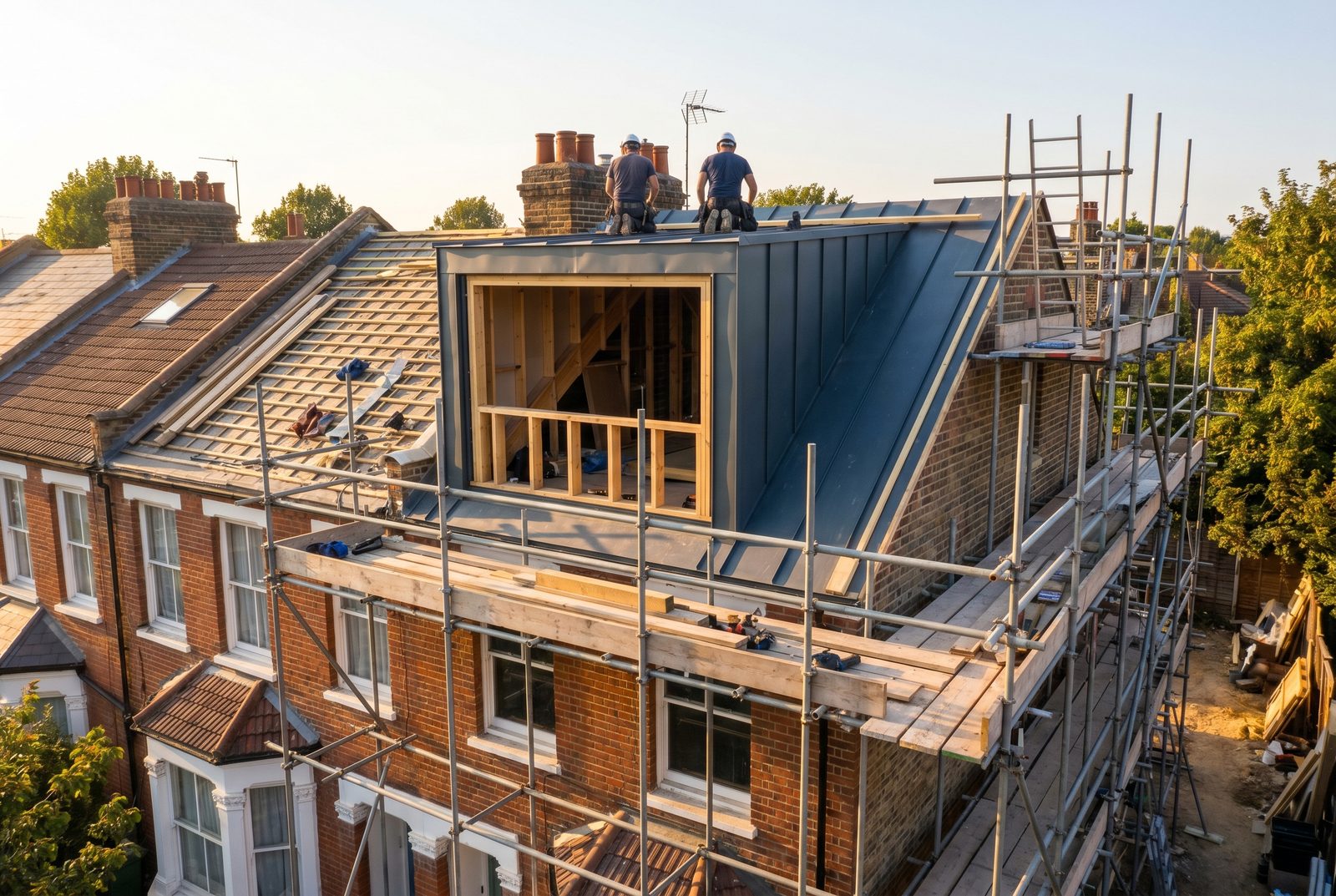
The build runs in a predictable sequence. Weeks one to two cover scaffolding, structural openings and installing the steel beams that carry the new floor. Weeks three to four form the dormer or gable, weatherproof the roof and complete the structure. Weeks five to six handle first fix — electrics, plumbing and the new staircase opening — plus insulation and plasterboard. The final weeks deliver second fix, plastering, decoration, flooring and the building control completion inspection. A rooflight-only conversion compresses this; a mansard extends it. Weather rarely halts a loft because the existing roof keeps the house dry until the new structure is sealed.
What slows a loft conversion down?
Three things stretch timelines most often. First, planning: if your loft needs permission rather than permitted development, expect an 8-week determination period before work can even start. Second, party wall agreements: a neighbour who does not consent within 14 days of your notice triggers the surveyor process, which can add several weeks and £700–£2,500 per affected neighbour in fees. Third, material lead times: bespoke steel and made-to-order windows can carry multi-week waits, so ordering early matters. Roughly a quarter of North London streets sit in conservation or Article 4 areas where planning is mandatory, which alone adds a couple of months to those projects.
How can I speed up my loft conversion?
You cannot rush building control inspections or planning periods, but you can compress the front end. Run the design, structural calculations and the Lawful Development Certificate application in parallel rather than sequentially. Serve party wall notices early — the moment your design is settled — so the 14-day consent window starts ticking sooner. Order long-lead items like steel and glazing as soon as dimensions are fixed. And appoint a single design-and-build contractor rather than juggling separate architect, engineer and builder, which removes the hand-off delays that add weeks between stages.
How does the type of loft conversion affect the build time?
The amount of new structure drives the on-site duration directly. A rooflight conversion barely alters the roof, so it can finish in around 4–6 weeks. A standard rear dormer or hip-to-gable involves forming new structure and reworking the roof, landing in the 6–10 week range. A mansard effectively rebuilds the roof into a new storey and therefore runs longest, often 10–14 weeks. An L-shaped dormer over a Victorian outrigger sits towards the upper end too, because it is really two dormers in one. Matching your expectations to the type avoids the disappointment of assuming a complex conversion will move at rooflight speed.
Why do approvals often take longer than the building work?
Because the build is something a contractor controls, while approvals depend on third parties working to their own timetables. A planning application sits with the council for its 8-week determination period whatever you do. A party wall surveyor process unfolds at the pace of correspondence between neighbours. Bespoke steel and made-to-order glazing arrive when the supplier schedules them. None of these can be accelerated by working harder on site, which is why a project with permission needed and a party wall dispute can spend more calendar time waiting than building. Planning the approvals early, in parallel, is the only real lever you have.
Frequently asked questions
Can I live in my house during a loft conversion?
Usually yes. Because the work happens above the existing ceilings and the old roof stays on until the new structure is weatherproof, most households remain in the home throughout, apart from a disruptive day or two when the stairwell is opened up into the floor below.
How long does just a Velux loft conversion take?
A rooflight-only conversion is the quickest, often completing on site in around 4–6 weeks, because the roof structure is barely altered. There is no dormer to build or roofline to reform, so several construction stages simply drop away.
Does planning permission add to the timeline?
Significantly. A full planning application carries an 8-week determination period before building can begin, and that is on top of design time. Permitted-development conversions avoid this entirely, which is one reason they finish so much faster.
What is the longest part of the process?
For permitted-development jobs, the on-site build at 6–10 weeks. For projects needing planning permission, the approvals stage often becomes the longest single element once you combine the application period with party wall agreement and material lead times.
A realistic timeline starts with a realistic design, and that starts with seeing your roof. Our loft conversions hub explains how we sequence each project, or book a free site visit and we will map your timeline stage by stage — The Extension Company, Cockfosters, 020 3051 9430.
Related service
Loft Conversions — fixed-price design & buildDormer, hip-to-gable and Velux conversions across North London, with permitted development checked free before you commit.
Thinking about your own extension?
Design yours in the Extension Builder for an honest guide price in 60 seconds — no email needed — or book a free site visit for a fixed, itemised quote from the Pine Grove team.
Or call us — 020 3051 9430
The London extension breakdown, in your inbox
One thoughtful piece a week on what extensions actually cost in London, what councils are approving, and the mistakes worth avoiding. No fluff, no spam, unsubscribe in one click.
We'll only email you about London extensions. Unsubscribe any time.
Explore More House Extension Design Options
Related Articles
Complete guide to house extension timelines. Understand planning timelines, building regulations approval, construction phases, and factors affecting project duration.
Most North London loft conversions are permitted development and need no application — but conservation areas and Article 4 zones change everything.
The 2026 permitted development rulebook for loft conversions — volume caps, the principal elevation rule, glazing, and what voids your PD rights.
Ready to Get Started?
Henry Lewis
Henry Lewis covers UK home extensions, planning permission, and renovation for The Extension Company. He has spent the last decade writing about property and the British housing stock, with a particular focus on how London homeowners navigate the planning system and get the most from their builds.