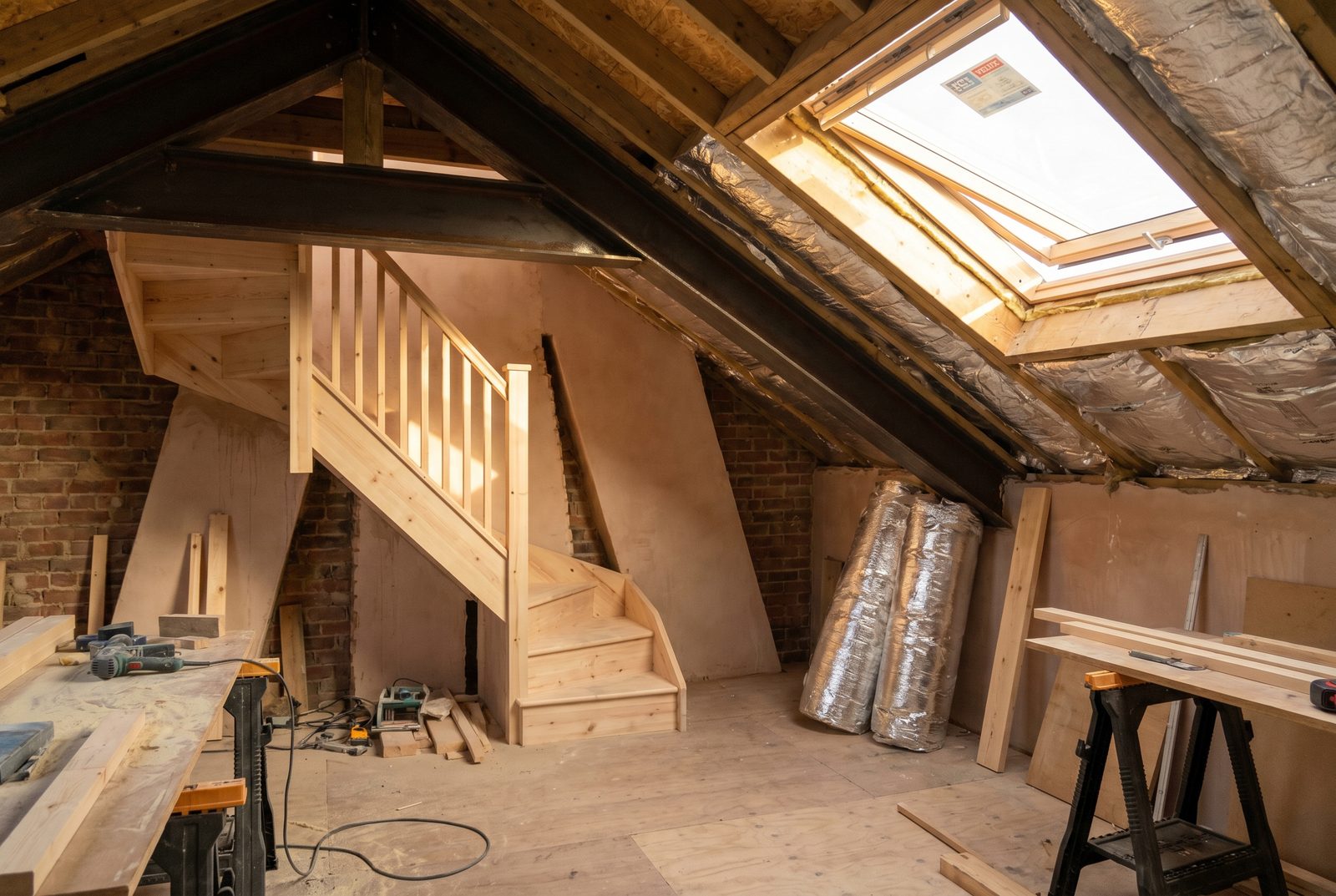
Loft Conversion Building Regulations: The 2026 Guide
Every loft conversion needs building regulations approval, even when planning isn't required. What the 2026 regs cover: fire, stairs, floors, insulation.
Last updated: June 2026 · Verified against current government planning rules and North London council records.
Do I need building regulations for a loft conversion?
Quick answer: Yes — always. Every habitable loft conversion in England requires building regulations approval, regardless of whether planning permission is needed. The regs cover floor strength, fire safety and escape, stair design, insulation and ventilation. Approval typically costs £500–£1,500, and without it the room cannot legally be a bedroom.
Here is the distinction that trips up nearly every first-time loft owner in North London: planning permission and building regulations are completely separate. You might never need planning permission — most lofts are permitted development — but you will always need building regulations sign-off. Planning asks whether you may build it; building control asks whether what you built is safe to live in. Skip the latter and your loft is, legally, just storage. This guide covers exactly what the 2026 regulations demand.
What is the difference between planning permission and building regulations?
They answer different questions and are granted by different processes. Planning permission governs the external impact of your build — its size, appearance and effect on neighbours — and most lofts sidestep it through permitted development. Building regulations govern the technical safety of the structure: will the floor carry the load, can you escape in a fire, is the stair safe, is it warm enough? Building control either inspects the work in stages and issues a completion certificate, or it does not, in which case you have an unauthorised conversion. You can have permitted development and still fail building control entirely; the two are independent, run by different teams, on separate timetables, with separate fees. A loft can be 100% within its planning rights and still be illegal to occupy because it never passed building control.
What do loft conversion building regulations cover?
The regulations break into several areas, each inspected before sign-off. The table summarises the main requirements.
| Area | What the 2026 regs require |
|---|---|
| Floor strength | New floor joists sized to carry habitable loads, not just storage |
| Fire safety | Fire-protected escape route, fire doors to the new stair, and mains-wired smoke alarms on every storey |
| Stairs | A fixed staircase with compliant pitch, headroom and going — loft ladders are not permitted for habitable rooms |
| Insulation | Roof and walls upgraded to current thermal standards |
| Structure | Steel beams or engineered timber where the existing structure cannot carry the load, designed by an engineer |
| Ventilation | Adequate ventilation and, where rooflights serve as escape, minimum openable sizes |
Fire safety is the strictest area. Converting a two-storey house into three storeys legally changes the fire-escape requirements for the whole house, which is why a protected stairwell and fire doors become mandatory — not optional upgrades.
Why is fire safety so demanding on a loft conversion?
Because adding a third storey changes the escape distance from the top of the house to the front door. The regulations require a protected escape route: typically fire doors to each room off the new stairwell, fire-rated construction to the stair enclosure, and interlinked mains-powered smoke alarms on every floor. In some layouts an escape window or a sprinkler arrangement is needed. This is also why a "loft room" sold without building regulations is dangerous as well as illegal — it lacks the fire compartmentation that makes a third storey survivable.
How much does building control cost and how does approval work?
Building control sign-off for a loft conversion typically costs £500–£1,500, paid either to the local authority building control team or to an approved (private) building control inspector. You can apply via a full plans application, where drawings are checked before work starts, or a building notice for simpler jobs. Either way, the inspector visits at key stages — structure, insulation, fire measures — and issues a completion certificate at the end. That certificate is the document that proves the room is a lawful bedroom; mortgage lenders, surveyors and buyers all ask for it. Budget separately for a structural engineer at £500–£1,500 to design any steelwork.
Frequently asked questions
Can I call a loft room a bedroom without building regulations?
No. Without a building control completion certificate the space is not a legal habitable room and cannot be marketed as a bedroom. Estate agents must describe it as a loft room or storage, which reduces the value the conversion adds.
What happens if my loft was converted without building regulations?
You can apply for regularisation, where building control inspects existing work retrospectively and certifies it if it meets standards — though opening up may be needed to prove compliance. Until regularised, the conversion can stall a sale and may not be covered by insurance.
Do I need a structural engineer for a loft conversion?
Almost always. Loft floors and new openings usually require steel beams or engineered timber sized by a structural engineer, whose calculations building control then checks. Engineer's fees typically run £500–£1,500 depending on complexity.
Does building control check insulation as well?
Yes. The roof slopes, dormer walls and flat-roof sections must meet current thermal standards, and the inspector verifies this before sign-off. Modern insulation requirements are a key reason a properly converted loft is far warmer than an old uninsulated roof space.
Building regulations are non-negotiable, and getting them right first time saves expensive opening-up later. Our loft conversions hub explains how we handle building control on every project, or book a free site visit — The Extension Company manages the regs and the engineer for you, fixed-price, on 020 3051 9430.
Related service
Loft Conversions — fixed-price design & buildDormer, hip-to-gable and Velux conversions across North London, with permitted development checked free before you commit.
Thinking about your own extension?
Design yours in the Extension Builder for an honest guide price in 60 seconds — no email needed — or book a free site visit for a fixed, itemised quote from the Pine Grove team.
Or call us — 020 3051 9430
The London extension breakdown, in your inbox
One thoughtful piece a week on what extensions actually cost in London, what councils are approving, and the mistakes worth avoiding. No fluff, no spam, unsubscribe in one click.
We'll only email you about London extensions. Unsubscribe any time.
Explore More House Extension Design Options
Related Articles
Understand 2026 building regulations for extensions. Learn compliance requirements, insulation standards, fire safety, ventilation, and the approval process.
Most North London loft conversions are permitted development and need no application — but conservation areas and Article 4 zones change everything.
The 2026 permitted development rulebook for loft conversions — volume caps, the principal elevation rule, glazing, and what voids your PD rights.
Ready to Get Started?
Henry Lewis
Henry Lewis covers UK home extensions, planning permission, and renovation for The Extension Company. He has spent the last decade writing about property and the British housing stock, with a particular focus on how London homeowners navigate the planning system and get the most from their builds.