Types of Loft Conversion: Dormer, Hip-to-Gable, Mansard & Velux
The five loft conversion types compared — Velux, dormer, hip-to-gable, L-shaped and mansard — with what each suits, costs and planning status.
Last updated: June 2026 · Verified against current government planning rules and North London council records.
What are the main types of loft conversion?
Quick answer: There are five common types — Velux (rooflight), dormer, hip-to-gable, L-shaped and mansard. Velux is cheapest and almost always permitted development; mansard creates the most space but usually needs planning permission. Your roof shape, head height and budget decide which suits your North London home.
Not every loft is the same, and neither is every conversion. The type you choose depends on your roof's pitch, the available head height, whether you need a full extra floor or just a usable room, and what your council allows on your street. Below, each of the five main types is compared on what it suits, the typical cost in North London, and its planning position — so you can shortlist before a designer ever visits.
How do the five loft conversion types compare?
The table below sets the options side by side. Costs are indicative ranges for North London and vary with finish, access and structural complexity.
| Type | Best suited to | Typical cost (North London) | Planning status |
|---|---|---|---|
| Velux / rooflight | Lofts with generous existing head height needing minimal change | £25,000–£40,000 | Almost always permitted development |
| Dormer | Adding floor area and headroom on terraces and semis | £45,000–£70,000 | Usually permitted development (rear) |
| Hip-to-gable | Semi-detached and end-of-terrace houses with a hipped roof | £50,000–£75,000 | Usually permitted development |
| L-shaped dormer | Victorian terraces with a rear outrigger or back addition | £60,000–£90,000 | Usually permitted development (rear) |
| Mansard | Maximising volume across the whole roof, often in terraces | £65,000–£95,000+ | Usually needs planning permission |
As a rule of thumb, cost rises with the amount of new structure: a rooflight conversion barely alters the roof, while a mansard effectively rebuilds it. Around 70% of North London loft conversions are dormer or hip-to-gable schemes, because they balance space gained against cost and planning ease.
What is a Velux or rooflight conversion?
The simplest type. The existing roof structure stays exactly as it is, and rooflights are fitted flush into the slope to bring in light. There is no change to the roofline, which is why this is the cheapest option and the most likely to be permitted development. The catch is head height — you need adequate space under the existing ridge already, since nothing is added. Ideal for tall Edwardian roofs; useless where the apex is barely 2 metres.
What is a dormer and a hip-to-gable conversion?
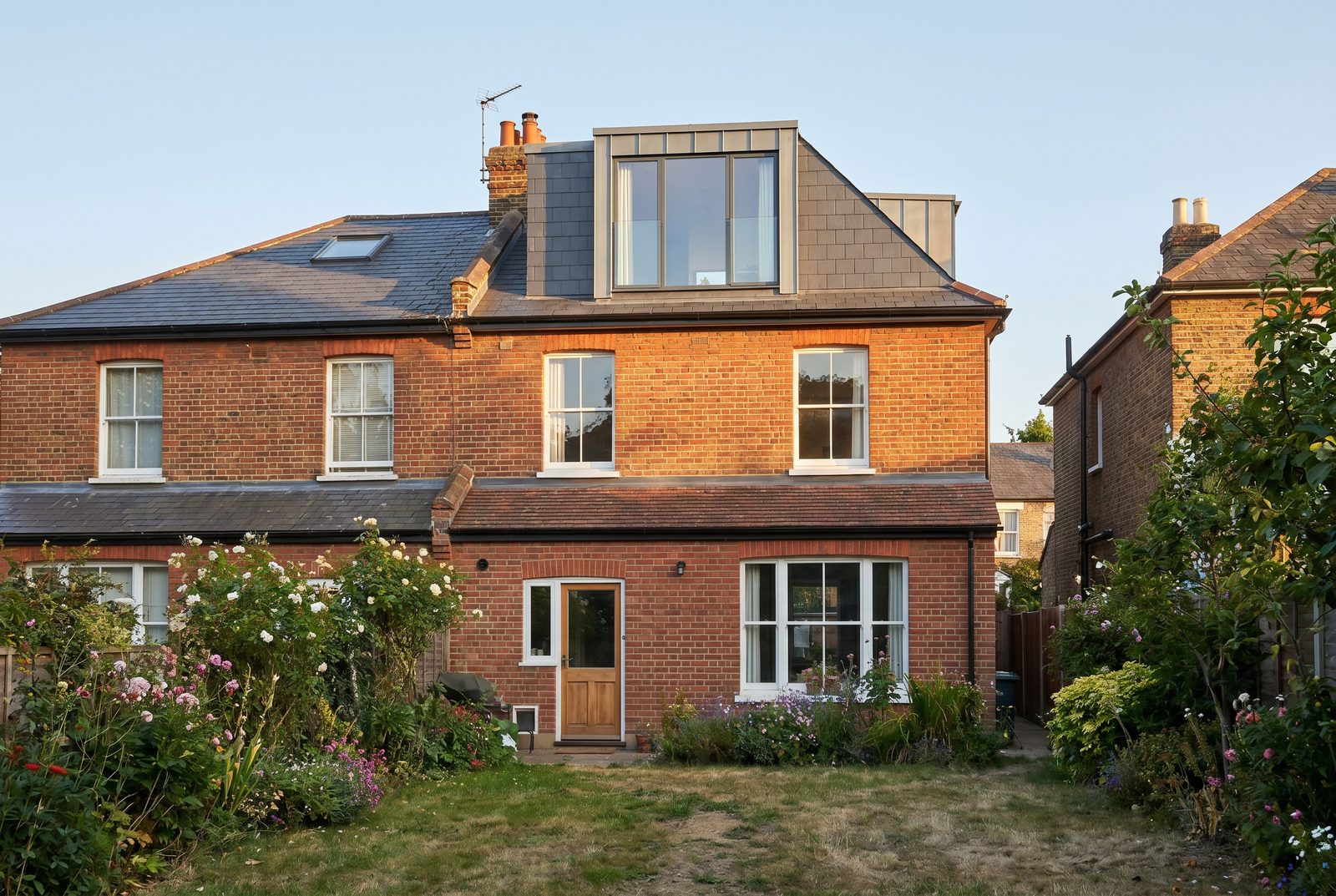
A dormer projects outward from the roof slope to create a box of full-height space, dramatically increasing usable floor area and headroom — it is the default North London choice for terraces and semis. A hip-to-gable conversion replaces a sloping hipped roof end with a vertical gable wall, squaring off the roof to unlock the volume that the slope wasted; it suits semi-detached and end-of-terrace houses. The two are often combined: a hip-to-gable plus rear dormer is one of the most space-efficient schemes available, and both typically fall within permitted development at the rear.
Why does a mansard usually need planning permission?
A mansard rebuilds the roof into a near-vertical rear (or front and rear) slope, creating an almost full additional storey. Because it transforms the roofline so substantially — and is most common in conservation-sensitive terraced streets — it usually needs planning permission, and councils scrutinise it closely in conservation areas where uniform rooflines matter. The upside is unmatched: a mansard yields the most floor space of any loft type. The trade-off is cost, time and planning risk. Whatever type you pick, building regulations approval is always required, typically costing £500–£1,500.
What is an L-shaped dormer and which houses suit it?
An L-shaped dormer is two dormers joined at right angles — one over the main roof and one over the rear outrigger or back addition that so many Victorian and Edwardian North London terraces have. The result wraps around the back of the house and typically yields a full master suite plus a second room, which is why it adds more usable space than a single dormer. It only works where the property has that rear projection to build over, so it suits period terraces in Enfield, Barnet and Haringey far more than 1930s semis. Because the work sits at the rear, an L-shaped dormer usually falls within permitted development, subject to your volume allowance and conservation status.
How does roof shape decide which conversion you can have?
Your existing roof dictates the realistic options before budget even enters the conversation. A hipped roof — sloping on all sides — wastes volume at the ends, which is exactly what a hip-to-gable conversion recovers. A gabled roof, already vertical at the ends, often suits a straightforward dormer. A low ridge height pushes you towards a dormer or mansard to gain headroom, since a rooflight conversion needs height that is already there. And a rear outrigger opens the door to an L-shaped design. A designer reads these features in minutes on a site visit, which is why the type is best confirmed by measuring the roof rather than guessing from the street.
Frequently asked questions
Which loft conversion type adds the most space?
A mansard, followed by an L-shaped dormer on a Victorian outrigger. Both create near-full additional storeys. A Velux conversion adds the least because it works only with the volume the roof already has.
Which type is cheapest?
A Velux or rooflight conversion, typically £25,000–£40,000 in North London, because it leaves the roof structure untouched. The price climbs as you add structure: dormer, then hip-to-gable, then L-shaped, then mansard.
Can I combine two types of loft conversion?
Yes, and many North London schemes do. Hip-to-gable combined with a rear dormer is especially common on semis, squaring off the hipped end and then projecting a dormer to maximise the usable footprint in a single project.
How do I know which type my house can take?
It comes down to roof shape and head height. Hipped roofs suit hip-to-gable; terraces with low ridges often need a dormer or mansard for headroom; outriggers favour L-shaped designs. A site visit measuring your ridge height settles it quickly.
Comparing the types is the easy part — pricing them for your exact roof is where it counts. See current figures on our loft conversion cost London page, or book a free site visit and we will tell you which type your roof can take, fixed-price, from our Cockfosters base on 020 3051 9430.
Related service
Loft Conversions — fixed-price design & buildDormer, hip-to-gable and Velux conversions across North London, with permitted development checked free before you commit.
Thinking about your own extension?
Design yours in the Extension Builder for an honest guide price in 60 seconds — no email needed — or book a free site visit for a fixed, itemised quote from the Pine Grove team.
Or call us — 020 3051 9430
The London extension breakdown, in your inbox
One thoughtful piece a week on what extensions actually cost in London, what councils are approving, and the mistakes worth avoiding. No fluff, no spam, unsubscribe in one click.
We'll only email you about London extensions. Unsubscribe any time.
Explore More House Extension Design Options
Related Articles
A loft extension is a loft conversion that grows the roof — dormer, hip-to-gable or mansard. 2026 North London costs, the 40m³/50m³ rules, and when planning is needed.
Dormer bedroom-and-en-suite layouts, staircase placement, headroom tricks and eaves storage — loft conversion ideas that fit London terraces and semis.
The 2026 permitted development rulebook for loft conversions — volume caps, the principal elevation rule, glazing, and what voids your PD rights.
Ready to Get Started?
Henry Lewis
Henry Lewis covers UK home extensions, planning permission, and renovation for The Extension Company. He has spent the last decade writing about property and the British housing stock, with a particular focus on how London homeowners navigate the planning system and get the most from their builds.