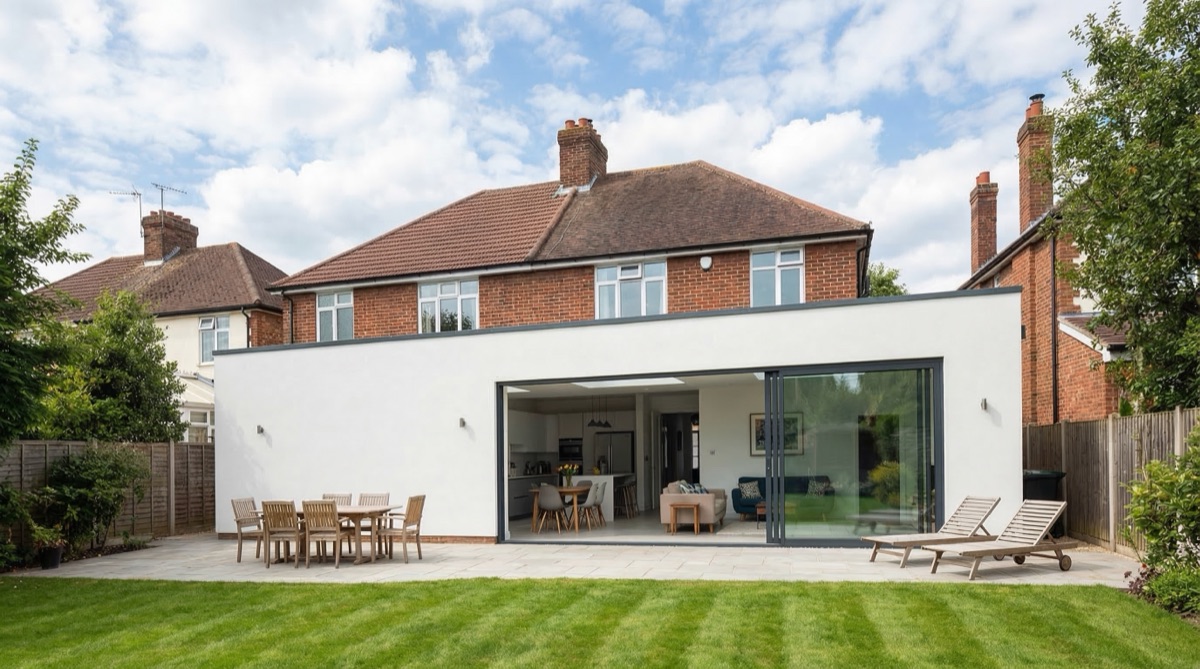
House Extension Costs London 2026: Area-by-Area Price Guide
Updated 2026 price guide for house extensions across London. Costs for single storey, double storey, loft conversions and more — broken down by area and project type.
Last updated: June 2026 · Figures checked against live North London quotes and current government fee schedules.
How Much Does a House Extension Cost in London in 2026?
Quick answer: In 2026 a London single storey rear extension runs £1,800-£3,000 per square metre — £40,000-£120,000 depending on spec — with North London builds at £2,800-£4,200 per square metre. Central London adds 15-25% over outer boroughs like Enfield and Bromley.
House extension costs in London vary significantly depending on the type of extension, the area you live in, the specification of finishes, and the complexity of the structural work involved. This guide provides realistic 2026 pricing based on our experience delivering projects across Greater London and the surrounding areas. Understanding costs across different property types and locations helps you budget accurately for your project.
Cost by Extension Type
How much does a single storey rear extension cost?
A single storey rear extension is the most common type of extension in London. Costs typically range from £1,800 to £3,000 per square metre depending on the specification and location.
Budget specification: £40,000 to £55,000 for a 20sqm extension with standard finishes, basic kitchen, and no premium features.
Mid-range specification: £55,000 to £80,000 for a 25-30sqm extension with bi-fold doors, underfloor heating and a good quality kitchen with island.
Premium specification: £80,000 to £120,000+ for a high-end extension with bespoke joinery, premium materials, top-of-the-range appliances, and designer finishes.
What does a double storey extension cost?
A double storey extension adds space on two floors, typically providing a larger kitchen or living area on the ground floor and an additional bedroom or bathroom above. Double storey extensions share foundation and roof costs across two floors.
Typical cost: £65,000 to £130,000 depending on size and specification. Per square metre costs are lower than single storey because you share the foundation and roof costs across two floors, reducing cost per sqm by approximately 25-30%.
Loft Conversion
Rear dormer: £45,000 to £65,000. L-shaped dormer: £55,000 to £75,000. Hip-to-gable: £55,000 to £80,000. Mansard: £65,000 to £90,000+. Loft conversions represent exceptional value, costing 30-40% less per square metre than ground floor extensions.
Side Return Extension
Typical cost: £35,000 to £55,000 for a standard side-return infill on a Victorian or Edwardian terrace with basic kitchen and finishes.
Wrap-Around Extension
Typical cost: £70,000 to £120,000 combining side-return and rear extension work, typically 35-50sqm of new space.
Garage Conversion
Typical cost: £15,000 to £30,000 for a basic integral garage conversion. This is one of the most affordable ways to add usable space to your home without extending the building footprint.
What Affects the Cost?
Size and Complexity
Larger extensions cost more overall but typically less per square metre. Complex structural work — such as removing load-bearing walls, working near boundaries, or dealing with challenging ground conditions — increases costs substantially. Extensions on corner plots or with difficult access may cost 10-20% more due to site setup complexity.
Specification and Finishes
The quality of finishes has a significant impact on cost. A basic extension with standard finishes could cost half as much as one with premium materials, underfloor heating, bespoke joinery and high-end appliances. Budget for finishes that reflect your priorities and lifestyle preferences.
How much does structural complexity add?
Extensions involving structural complexity cost substantially more than straightforward designs. Removing load-bearing walls requires steel beams and additional structural support. Conversions near boundaries may require party wall awards increasing costs by £1,500-3,000. Challenging ground conditions requiring additional foundation work can add £5,000-10,000. Extensions on sloping sites requiring retaining walls or extensive groundworks add significant cost. Conversely, straightforward extensions with minimal structural intervention represent exceptional value.
Thermal Performance and Sustainability
Modern building regulations require excellent thermal performance, with construction costs now including high-performance insulation, airtight construction, and mechanical ventilation with heat recovery. These sustainability features add £8,000-15,000 to extension costs but deliver lasting benefits through reduced energy bills (typically 20-30% reduction in whole-house energy consumption) and improved indoor air quality. Solar panels or other renewable energy systems add further cost but may attract government incentives and reduce long-term operating costs substantially.
Location Within London
Construction costs are relatively consistent across London, but some areas command premium builder rates due to access difficulties, parking restrictions, or the type of properties involved. Central and prime London postcodes tend to have higher overall project costs due to premium labor rates and difficult site conditions. Suburban areas typically have lower labor costs reflecting broader market rates. As a working benchmark, North London builds currently price at £2,800-£4,200 per square metre once design, structure and finishes are included.
Planning and Regulatory Costs
Planning applications cost £548 for householder applications (from April 2026), plus a £91.02 Planning Portal processing charge unless you pay the council directly. Building regulations fees vary by project complexity but typically range from £500 to £1,500. Party wall surveyor fees (if required) typically cost £700 to £1,000 per neighbour. These are additional to construction costs and should be budgeted separately.
Extension Costs by London Area
| London area | Example boroughs | Typical cost per sqm |
|---|---|---|
| Central London | Chelsea, Kensington, Islington, Shoreditch | £3,200-£3,500 |
| Inner London | Hackney, Walthamstow, Clapham, Tooting | £2,500-£3,000 |
| Outer London | Enfield, Barnet, Bromley, Croydon | £2,000-£2,500 |
Central London (Chelsea, Kensington, Islington, Shoreditch): Generally 15-25% more expensive than outer London due to high labor costs and difficult site conditions. A standard rear extension might cost £3,200-3,500 per sqm versus £2,200-2,600 in suburban areas. Properties in these areas command such high value that premium extension costs are justified by the property value uplift.
Inner London (Hackney, Walthamstow, Clapham, Tooting): Moderate pricing with standard London rates applying. These areas offer better value than central London while maintaining excellent property appreciation. Extensions here typically cost £2,500-3,000 per sqm.
Outer London (Enfield, Barnet, Bromley, Croydon): Most affordable areas with construction costs typically £2,000-2,500 per sqm. Suburban properties with more generous gardens and simpler site conditions reduce costs. Outer London areas are excellent for value-conscious homeowners seeking space and property appreciation.
Return on Investment: Extension Costs vs Property Value Uplift
House extensions deliver exceptional return on investment across London. A £75,000 extension typically increases property value by £95,000-125,000 (in central London) to £85,000-100,000 (in suburban areas). This represents a 25-75% return on investment depending on location and design quality. Well-designed extensions with premium finishes command higher returns because buyers perceive greater quality and design excellence. Poor extensions may add only marginally more value than their construction cost because buyers see them as compromised or dated.
Beyond financial returns, extensions improve daily living quality immediately. A well-designed kitchen extension improves how you use your home every single day, improving quality of life in ways that transcend monetary calculation. The ability to entertain guests in a spacious, light-filled room rather than a cramped kitchen, or to have a dedicated home office or guest bedroom, represents value that extends far beyond property market appreciation.
How to Get an Accurate Quote
The most reliable way to understand the cost of your specific project is to arrange a free site visit. We will assess your property, discuss your requirements, and provide a detailed quote covering design, planning, building regulations and construction costs. Call us on 020 3051 9430 or request a free quote online. We cover all areas across London including Enfield, Barnet, Southgate, Hackney, Islington, Camden, Walthamstow, Chiswick, Clapham, Tooting, Mitcham, Morden, Peckham, Orpington, Biggin Hill and all surrounding areas.
Cost Variations by Property Type
Victorian/Edwardian Terraces: These period properties often require specialist conservation design in conservation areas or when listed, adding 10-15% to costs. However, side-return opportunities unique to terraces reduce costs per square metre compared to other property types. Typical Victorian terraces average £2,400-2,800 per sqm.
Semi-Detached Houses: Semi-detached properties typically have fewer conservation constraints and more flexible expansion options than terraces. Construction costs often 5-10% lower than terraces due to simpler party wall arrangements. Range: £2,200-2,700 per sqm.
Detached Houses: Detached properties offer greatest flexibility with minimal neighbor constraints. Costs are typically 10-20% lower than equivalent terraced extensions due to simpler structural work and no party wall requirements. Range: £2,000-2,600 per sqm.
Contract Variations and Hidden Costs
While the costs above represent typical budgets, contract types significantly impact risk allocation. Fixed-price contracts protect against cost escalation but may exclude variations. Cost-plus contracts protect builders from unexpected costs but expose homeowners to variation risks. Understanding contract terms, contingency allowances (typically 10%), and allowances for provisional sums prevents budget overruns. Homeowners should budget 10-15% above base costs for contingencies, unexpected conditions, and client-requested modifications that inevitably arise during construction.
Frequently asked questions
Which London areas are cheapest for building an extension?
Outer boroughs such as Enfield, Barnet, Bromley and Croydon, at roughly £2,000-£2,500 per square metre — 15-25% below central postcodes thanks to easier site access and standard labour rates.
What planning and regulatory fees apply on top of the build?
The householder planning application costs £548 from April 2026 (plus a £91.02 Planning Portal charge unless paid direct to the council), building regulations fees run £500-£1,500, and party wall surveyors cost £700-£1,000 per neighbour where required.
Is a loft conversion cheaper than a rear extension?
Per square metre, yes — loft conversions cost 30-40% less than ground floor extensions, with rear dormers from £45,000 and mansards up to £90,000+.
What return do London extensions deliver?
A £75,000 extension typically lifts property value by £85,000-£125,000 depending on area — a 25-75% return — with central London seeing the biggest uplifts.
Related service
Extension Cost GuideReal per-m² pricing for North London extensions, updated for 2026.
Thinking about your own extension?
Design yours in the Extension Builder for an honest guide price in 60 seconds — no email needed — or book a free site visit for a fixed, itemised quote from the Pine Grove team.
Or call us — 020 3051 9430
The London extension breakdown, in your inbox
One thoughtful piece a week on what extensions actually cost in London, what councils are approving, and the mistakes worth avoiding. No fluff, no spam, unsubscribe in one click.
We'll only email you about London extensions. Unsubscribe any time.
Explore More House Extension Design Options
Related Articles
Complete guide to house extension costs in the UK. Learn about fee structures, budgeting tips, and how to get maximum value from your house extension investment.
Navigate planning permission for house extensions in London. Understand permitted development rules, when permission is required, and how to secure approval.
Whether your extension needs planning permission, the verified 2026 fees, how long councils really take, the 10-year enforcement rule that replaced the 4-year rule — and every planning guide we publish, linked from one place.
Ready to Get Started?
Henry Lewis
Henry Lewis covers UK home extensions, planning permission, and renovation for The Extension Company. He has spent the last decade writing about property and the British housing stock, with a particular focus on how London homeowners navigate the planning system and get the most from their builds.