Loft Conversion vs Extension: Cost, Value & Which Adds More
Loft conversion or extension? One adds bedrooms without touching the garden; the other expands living space. 2026 costs, value added, and how to do both.
Last updated: July 2026 · Fees verified against the Planning Portal's official April 2026 fee schedule and current permitted development rules.
Should I do a loft conversion or an extension?
Quick answer: Choose a loft conversion if you need bedrooms and want to keep your garden — it typically adds 15–20% value and costs £45,000–£70,000 for a dormer. Choose an extension if you need bigger living space like a kitchen-diner — North London builds price at £2,800–£4,200 per m². Both are often permitted development, and if you need bedrooms and living space, you can do both — usually loft first.
For North London families running out of room, it usually comes down to up or out: convert the loft for more bedrooms, or extend the ground floor for more living space. They are not interchangeable — a loft gives you bedrooms while keeping the garden, an extension gives you living space at the cost of garden. The decision turns on what your home is short of, your budget, and which adds more value on your street. Here is the full comparison, with 2026 costs and planning fees checked against the current Planning Portal schedule, to make the call.
What is the fastest way to decide?
Forget square metres for a moment and name the room you complain about. If it is a bedroom problem — children sharing, no guest room, nowhere to put a desk — the loft is almost always the answer, because it adds sleeping accommodation without sacrificing any garden. If it is a downstairs problem — a galley kitchen, nowhere to eat together, a living room that cannot hold the whole family — extend, because no loft ever fixed a cramped kitchen. And if it is honestly both, you are not choosing at all: you are sequencing two projects, which we cover further down. One goal, one answer:
That single question settles most cases, because the two projects solve different problems and their price ranges overlap enough that budget rarely decides the argument on its own. The sections below put verified numbers on each branch.
How do a loft conversion and an extension compare?
The table sets the two routes against each other across the factors homeowners weigh most, at July 2026 North London prices. Every figure is a guide, not a quote.
| Factor | Loft conversion | Rear extension |
|---|---|---|
| Typical cost (North London, 2026) | £45,000–£70,000 (dormer); £25,000–£40,000 (rooflight only) | £55,000–£80,000 all-in for 15m²; £75,000–£110,000 for a 20m² kitchen extension |
| Cost per m² gained | Roughly £1,800–£2,600 | £2,800–£4,200 build cost, plus VAT and fees |
| What it adds | Bedrooms, often an en-suite | Living space — kitchen, dining, family room |
| Value added | 15–20%; up to 24% adding a large double bedroom and bathroom (Nationwide, 2025) | Significant — strongest when it fixes an inadequate kitchen |
| Planning odds | Usually permitted development within the 40m³/50m³ volume caps | PD to 3m/4m deep; 6m/8m via £249 prior approval; beyond that, a £548 application |
| Build time | 6–10 weeks | 10–16 weeks |
| Disruption | Low — mostly above the ceilings; live in throughout | High — ground floor and kitchen opened up |
| Garden impact | None — built into the roof | Reduces garden footprint |
The defining difference is the trade-off with your garden: a loft adds rooms without touching outdoor space, while an extension consumes garden to grow the ground floor. On cost per square metre the loft usually wins as well. A dormer conversion typically creates 20–30m² of new floor area, so £45,000–£70,000 works out at roughly £1,800–£2,600 per square metre — against £2,800–£4,200 plus VAT for extension work — because the loft reuses structure your house already has: the walls, the floor position and most of the roof.
When is a loft conversion the better choice?
A loft wins when bedrooms are what you lack and the garden is precious. It adds sleeping accommodation — often a master suite with en-suite — without sacrificing an inch of outdoor space, which matters enormously to North London family buyers who want both. The value case is strong: a loft typically adds 15–20%, frequently more when it takes a home from two beds to three or three to four, crossing a key buyer threshold. It is usually permitted development within the 40m³ (terraced) or 50m³ (semi-detached and detached) roof volume allowance — the full conditions are in our loft conversion permitted development guide — it completes in 6–10 weeks, and you can live in the house throughout because most work happens above the existing ceilings. The main qualifiers are headroom, since you want around 2.2m under the existing ridge, and conservation-area or Article 4 restrictions, which cover many North London streets — check your address on your council's planning map before you commit. Rooflight, dormer, hip-to-gable and mansard options are compared in our guide to the types of loft conversion. If you need bedrooms, the loft is almost always the answer.
When is an extension the better choice?
An extension wins when your problem is downstairs living space, not bedrooms. A cramped kitchen, no room to dine, nowhere for the family to gather — these are ground-floor problems a loft cannot solve. A rear extension delivers the open-plan kitchen-diner that modern families want, and it integrates seamlessly with the existing living areas. A small single-storey rear extension is often permitted development too, within the 3m attached or 4m detached depth limit, extendable to 6m or 8m through the larger-home prior approval process at £249. Beyond those limits you need a householder planning application, which Planning Portal lists at £548 since April 2026 — the routes are mapped in our extension planning permission guide. The trade-offs are garden space, a longer and more disruptive build at 10–16 weeks with the ground floor opened up, and a higher cost per square metre — current rates are broken down on our North London extension cost page. If daily downstairs life is the bottleneck, extend.
Which adds more value, a loft or an extension?
It depends on what your home needs most, but lofts often edge it on return per pound. Nationwide's 2025 house price research finds that adding a large double bedroom and a bathroom can add up to 24% to the value of a three-bed, one-bathroom house, and that a 10% increase in floor space typically adds around 5% to value. Because a loft adds bedrooms — the strongest single value driver — while keeping the garden, it frequently delivers a 15–20% uplift on a relatively contained budget. An extension can add more in absolute terms when it transforms a poky kitchen into a sought-after open-plan space, but it costs more per metre and reduces garden. The smartest move is to match the project to the gap: adding a fourth bedroom to a three-bed usually returns more than enlarging an already-adequate kitchen, and vice versa. Both, done well and kept under the local price ceiling, add value comfortably above their cost — the full arithmetic, with a worked Barnet example, is in our guide to whether a loft conversion adds value.
Can you do a loft conversion and an extension?
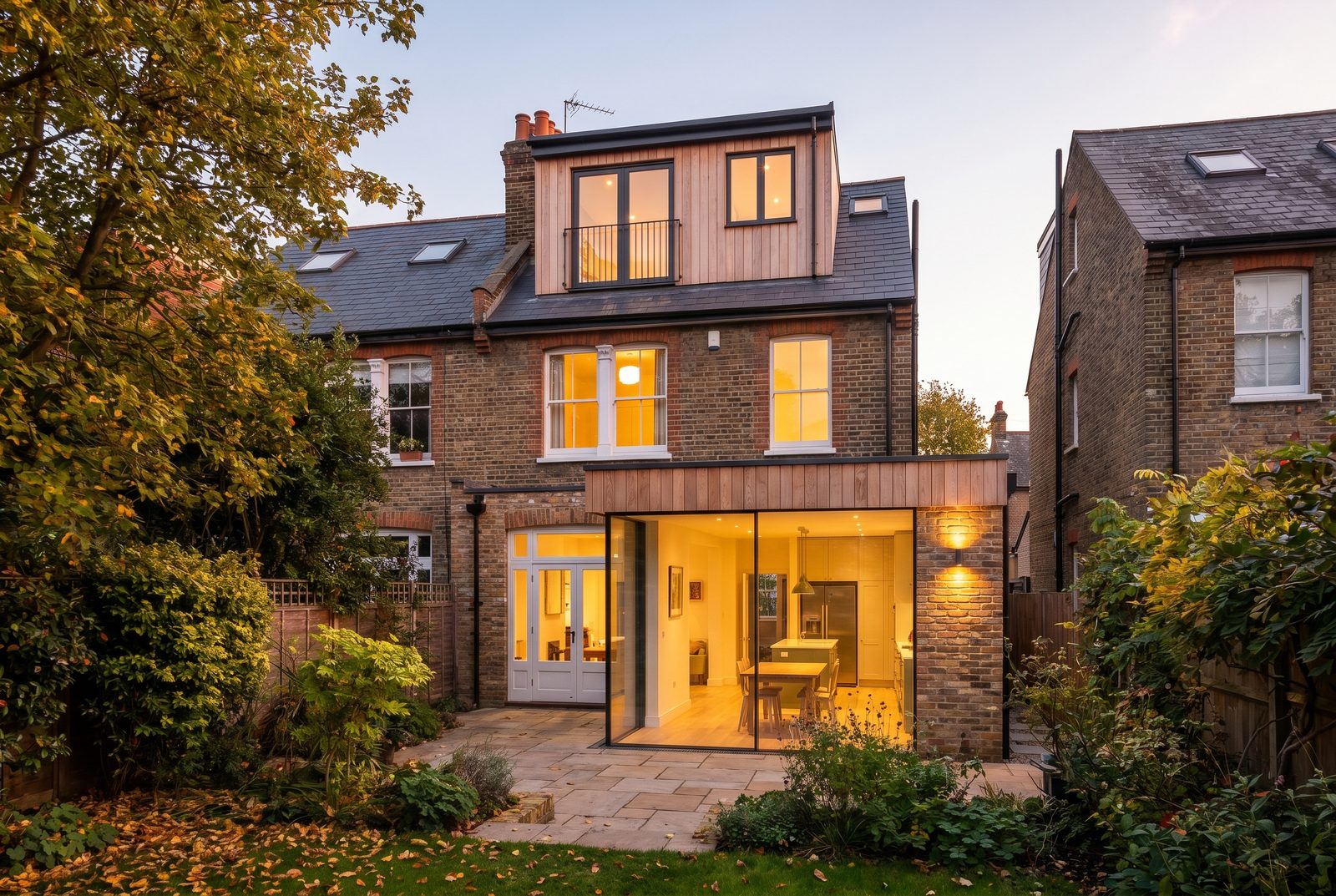
Yes — and on many Barnet, Enfield and Haringey streets the finished article is exactly that: a dormer loft above, a kitchen extension behind, turning a three-bed 1930s semi into a four-bed family house that would otherwise cost a move. Nothing in planning law stops you doing both. The real decisions are whether to build them together or in stages, which order to stage them in, and how to keep both inside permitted development.
Is it cheaper to do the loft and extension together?
Usually, modestly. One combined project shares scaffolding, skips, welfare facilities, a single design and structural package and one party wall process, which typically trims £5,000–£10,000 of duplicated preliminaries compared with running two separate projects a year or two apart. Just as valuable, one design pass means the whole house is engineered once: the new staircase, the steelwork and the drainage are planned as a single scheme rather than stage two working around stage one. As a 2026 guide, a dormer loft plus a 15m² rear extension lands at £100,000–£150,000 all-in, with a combined build typically 14–20 weeks on site. The counterweight is cash flow and disruption — you take the whole cost and the whole upheaval in one hit. Our 60-second cost estimator will give you a quick combined figure for your house.
Which should come first if you stage them?
Start with the project that fixes your most pressing shortage — and if the need is balanced, do the loft first. It is the less disruptive build, it adds the bedroom that moves value most, and it leaves the ground floor untouched for the extension later. The one non-negotiable is to design the end state before you build stage one. The loft stair position, the boiler flue, the soil vent pipe and the steel loads all need to anticipate the future extension, otherwise stage two begins by undoing part of stage one. A design-and-build firm can draw the whole masterplan up front and price the stages separately, so you commit to the second phase only when you are ready.
Does doing both cause planning problems?
Helpfully, no — the two projects draw on separate permitted development allowances. A loft conversion falls under Class B of the permitted development order, with its own 40m³ (terraced) or 50m³ (semi and detached) roof volume cap, while a single-storey rear extension falls under Class A with its own depth and height limits. Building one does not use up the other's allowance, so a house outside a conservation area can genuinely do both without any planning application. Where an element does need permission — a wraparound, a two-storey rear addition, an Article 4 street — one householder application at £548 covers the whole combined scheme: one fee, one decision, and often a stronger case because the council sees the complete design. A Lawful Development Certificate — £274 for proposed works, half the full application fee — gives written proof of whichever parts remain permitted development. Both projects always need building regulations approval, typically £500–£1,500 for building control, and both commonly trigger party wall notices on attached houses — served once, covering both, if you build together.
Frequently asked questions
Can I do both a loft and an extension?
Yes — they draw on separate permitted development allowances, so many houses can do both without planning permission. Build together to save roughly £5,000–£10,000 in shared preliminaries and scaffold, or stage them loft-first to spread the cost. Budget £100,000–£150,000 all-in for a dormer plus a 15m² rear extension, and check the combined spend stays under your street's price ceiling to protect the return.
Which is cheaper, a loft conversion or an extension?
The loft, usually — in total and per square metre. A straightforward dormer at £45,000–£70,000 reuses the structure your house already has and works out around £1,800–£2,600 per square metre, while North London extension work tenders at £2,800–£4,200 per square metre plus VAT and fees. A rooflight-only loft at £25,000–£40,000 is cheaper still, while a large wraparound extension with premium glazing sits at the top of every range.
Does a loft conversion add more value than an extension?
Often, on a per-pound basis, because bedrooms drive value most and the garden is preserved — Nationwide's 2025 research puts an added large double bedroom and bathroom at up to 24% on a three-bed, one-bathroom house. But an extension that fixes a genuinely inadequate kitchen can add more in absolute terms. The right comparison is which addresses your home's biggest shortfall relative to its cost.
Which causes less disruption to live through?
A loft conversion, generally. Because most of the work happens above the existing ceilings and the old roof keeps the house dry until the new structure is sealed, households usually stay in the home throughout. An extension opens up the ground floor and often the kitchen, which is more disruptive day to day — some families decamp for the final weeks of a big rear build.
Do I need planning permission for a loft conversion or an extension?
Usually neither. Most rear dormers sit within permitted development's 40m³/50m³ volume caps, and most single-storey rear extensions within the 3m/4m depth limits, extendable to 6m/8m via prior approval at £249. Where full permission is needed, Planning Portal lists the householder application fee at £548 since April 2026, plus a service charge of £75.83 + VAT (about £91) when you submit through the Portal — applying direct to your council avoids it. Conservation areas and Article 4 streets change the answer, and building regulations apply to every project regardless of planning status.
The best choice is the one that fixes what your home actually lacks — and every figure above is a guide, not a quote. As the extensions studio of Pine Grove Design & Build Ltd, with 25+ years building across Barnet, Enfield, Haringey and the Hertfordshire border, we design and build both routes — up, out or both at once — for a fixed price agreed before work starts. Compare current build costs on our loft conversion cost London page, or book a free site visit and we will advise honestly whether up or out makes more sense for your house — The Extension Company, Cockfosters, 020 3051 9430.
Related service
Loft Conversions — fixed-price design & buildDormer, hip-to-gable and Velux conversions across North London, with permitted development checked free before you commit.
Thinking about your own extension?
Design yours in the Extension Builder for an honest guide price in 60 seconds — no email needed — or book a free site visit for a fixed, itemised quote from the Pine Grove team.
Or call us — 020 3051 9430
The London extension breakdown, in your inbox
One thoughtful piece a week on what extensions actually cost in London, what councils are approving, and the mistakes worth avoiding. No fluff, no spam, unsubscribe in one click.
We'll only email you about London extensions. Unsubscribe any time.
Explore More House Extension Design Options
Related Articles
A loft conversion typically adds 15–20% to a home's value — and Nationwide's latest research puts a double bedroom with bathroom at up to 24%. The 2026 numbers, cost-vs-value tables and a Barnet worked example.
Garden room or extension? One is faster, cheaper and often planning-free; the other adds heated, connected space and more value. The full lifestyle comparison.
Most North London loft conversions are permitted development and need no application — but conservation areas and Article 4 zones change everything.
Ready to Get Started?
Henry Lewis
Henry Lewis covers UK home extensions, planning permission, and renovation for The Extension Company. He has spent the last decade writing about property and the British housing stock, with a particular focus on how London homeowners navigate the planning system and get the most from their builds.