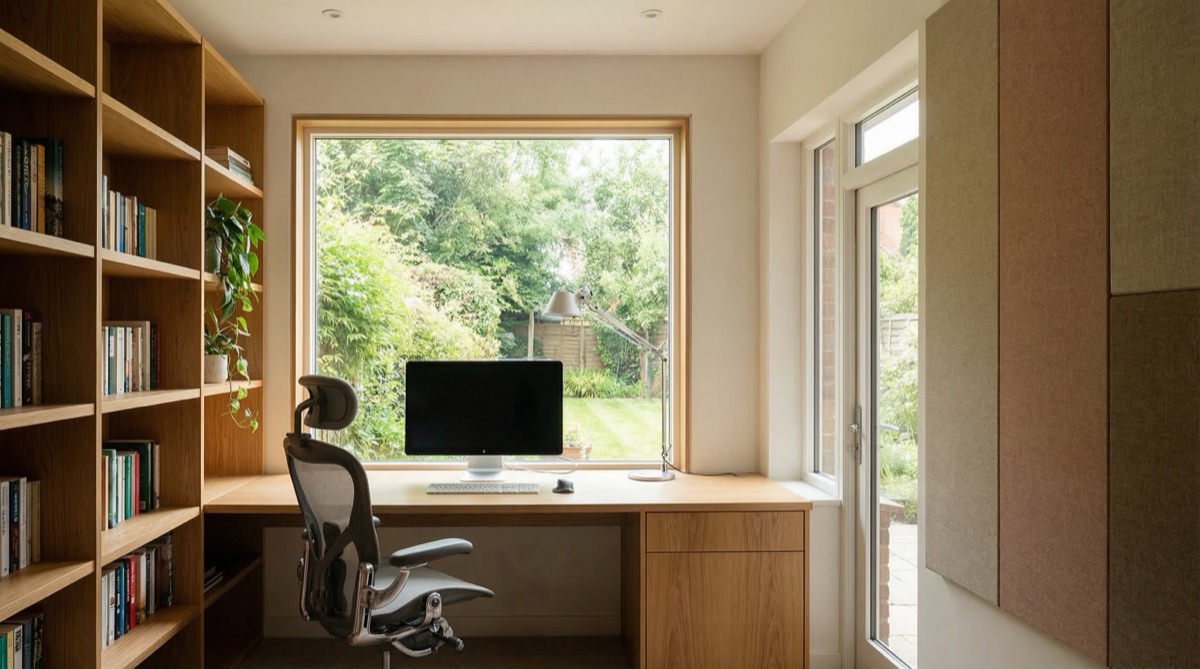
Home Office Extensions: Creating Your Perfect Work-from-Home Space
Design a dedicated home office extension. Learn about ergonomic layouts, lighting, acoustics, and creating a productive, professional workspace at home.
Last updated: June 2026 · Figures checked against live North London quotes and current government fee schedules.
Creating the Perfect Home Office Extension
Quick answer: A dedicated home office extension needs 12-16 square metres and costs £34,000-£80,000 in North London at 2026 build rates of £2,800-£4,200 per square metre. Expect to recover 70-85% of the spend in property value.
Since the pandemic, remote working has become mainstream for many professions. A dedicated home office extension provides space for focused work, professional video meetings, and clear separation between home and work life. Well-designed home office extensions increase productivity, improve work-life balance, and enhance property value. This comprehensive guide explores how to design and build a home office extension that creates an optimal working environment while maintaining professional appearance and comfort.
How much space does a home office extension need?
A functional home office extension typically requires 12-16 square metres, providing space for a desk, storage, seating for guests, and some flexibility. Optimal layouts avoid clutter while accommodating necessary equipment. Design considerations include: natural light for wellbeing and circadian rhythm support, acoustic control limiting external noise and work-related noise affecting others in the house, thermal comfort with independent temperature control, professional appearance for video meetings, and storage for office equipment and paperwork.
Ergonomic Layout and Furniture
Desk Positioning: Position desks to face away from windows (preventing glare on screens) while having windows within side view (providing light without glare). Avoid positioning desks with windows directly behind (creating backlighting in video calls) or facing walls (creating sense of constraint). Allow desk depth of at least 800mm for computer equipment and working space. Desk height of 700-750mm suits most people — adjustable-height desks accommodate different users and support standing-desk usage promoting better circulation and reducing sedentary time.
Chair Selection: A good office chair is essential for 8+ hours daily sitting. Invest in ergonomic seating with lumbar support, adjustable height and armrests, and quality wheels. Poor seating causes back pain and health problems. High-quality office chairs cost £200-500 but pay for themselves through improved health and productivity.
Monitor Positioning: Position screens at arm's reach (600-700mm) with tops at or slightly below eye level. Inadequate positioning causes neck and eye strain. Multiple-monitor setups increase productivity — consider mounting secondary monitors on arms allowing flexible positioning.
Lighting Design for Work Productivity
Natural Light: Abundant natural light supports wellbeing, productivity, and circadian rhythm. Position desks to receive natural light throughout the day without glare. Large windows or roof lanterns provide consistent natural light. However, natural light alone is insufficient for dark days or evening work.
Task Lighting: Dedicated task lighting (focused on desk area) reduces eye strain and improves visibility of documents. Adjustable desk lamps allow positioning to minimise glare on screens. LED lighting (cool white 4000-5000K) provides bright, energizing light suitable for focused work.
Ambient Lighting: Background lighting prevents contrast between bright task lighting and dark surroundings, reducing eye strain. Ambient lighting at 300-400 lux provides comfortable general illumination. Dimmable lighting allows adjustment for different times of day and tasks.
Glare Prevention: Screen glare reduces visibility and causes eye strain. Position screens perpendicular to windows to avoid direct glare. Use matte screen protectors if glare persists. Anti-glare window treatments (blinds, shades) allow control without eliminating natural light benefits.
How do you keep a home office quiet enough to work in?
Sound Insulation: Adequate sound insulation prevents work noise (calls, video meetings) disturbing the rest of the house and external noise disturbing concentration. Specification equivalent to extension walls and windows ensures adequate sound reduction. Acoustic panels on walls reduce reverberation and improve meeting audio quality.
Acoustic Treatment: Hard surfaces (glass, tile, concrete) reflect sound creating echoing, poor meeting audio. Soft furnishings (curtains, upholstered furniture, bookshelves with books) absorb sound improving acoustic quality. Strategic acoustic panels (particularly behind desk for meeting backgrounds) improve meeting appearance and audio quality.
Background Noise Control: Loud equipment (HVAC systems, computers) creates background noise affecting meetings. Specify quiet HVAC systems, position equipment away from working area, and use noise-dampening equipment housings. Effective noise control allows professional meetings without background distraction.
Professional Appearance for Video Meetings
Background Appearance: Ensure your background in video meetings appears professional and clutter-free. Bookshelves, plants, and artwork create more professional appearance than blank walls or clutter. Ensure background lighting is appropriate — darkly lit backgrounds appear unprofessional. Position camera to capture shoulders and torso, with head positioned in upper third of frame (professional composition).
Lighting for Video Calls: Proper facial lighting is essential for professional appearance in video meetings. Lighting from slightly above and in front (never from behind) provides flattering illumination. Position bright windows behind you (not in front) to avoid backlighting making you appear as a silhouette.
Decoration and Personalization: Professional doesn't mean sterile. Personal touches (artwork, plants, family photos on shelves) create warmth and personality. However, maintain professionalism by avoiding clutter or overly casual decoration visible in video backgrounds.
Storage and Organisation
Built-in Storage: Built-in shelving and cabinetry provide organised storage for office equipment, supplies, and paperwork while minimising visual clutter. Floor-to-ceiling shelving maximises storage in modest spaces. Glass-fronted cabinetry displays attractive items while closed storage hides less attractive supplies.
Filing and Document Management: Dedicated filing systems (physical files and digital) maintain organisation. Consider a small locked cabinet for confidential documents if you work with sensitive information. Digital file management (cloud storage) reduces physical document storage needs.
Equipment Storage: Designate space for equipment (printers, scanners, routers) that's accessible but not visually prominent in meeting backgrounds. Equipment closets or dedicated equipment shelves keep workspace clear.
Climate Control and Comfort
Temperature Control: A comfortable office temperature (21-22°C) supports productivity and concentration. Zone control allows your office to be independently heated/cooled. Avoid spaces that are too hot (promoting drowsiness) or too cold (causing discomfort and distraction).
Ventilation: Fresh air improves concentration and focus. Adequate ventilation removes CO2 buildup that causes fatigue and reduces cognitive function. Openable windows or mechanical ventilation ensure fresh air supply.
Humidity: Relative humidity of 40-60% supports comfort and health. Dry air (below 40%) causes discomfort, while humid air (above 60%) promotes mould. Good ventilation maintains healthy humidity levels.
Technology Infrastructure
Internet Connectivity: Fast, reliable internet is essential for video calls and cloud-based work. Ensure your extension has strong WiFi coverage. Ethernet connections (using cables) provide more reliable connectivity than WiFi if you're in an area with poor wireless coverage. Consider upgrading internet service before building if current speeds are insufficient.
Power Infrastructure: Adequate power outlets (one every 1.5-2m of wall space) accommodate equipment without extension cords. Dedicated circuits prevent overloading. USB charging points for devices reduce clutter from multiple chargers. Quality surge protection for valuable equipment is essential.
Audiovisual Equipment: Quality webcam and microphone improve meeting quality. External speakers provide better audio than built-in laptop speakers. Quality equipment doesn't need to be expensive — good USB webcams and microphones cost £50-150 and dramatically improve meeting experience.
What does a home office extension cost in 2026?
North London construction currently runs £2,800-£4,200 per square metre, with premium specification reaching £3,500-£5,000+. Applied to typical office sizes, realistic 2026 budgets look like this (full local breakdowns in our North London cost guide):
| Specification | Size | 2026 North London cost | What's included |
|---|---|---|---|
| Basic home office | 12m² | £34,000-£45,000 | Extension shell, insulation, basic fit-out, standard finishes |
| Standard home office | 14m² | £42,000-£59,000 | Good finishes, built-in storage, professional appearance |
| Premium home office | 16m² | £56,000-£80,000 | High-end finishes, acoustic treatment, lighting design |
| Garage conversion office | 15-30m² | £18,000-£35,000 | Best value — converts existing structure rather than building new |
Add professional fees on top: drawings £1,200-£2,500, building control £500-£1,500, and a £548 householder planning application if the design exceeds permitted development (a £274 lawful development certificate is worth having either way). Most contractor work attracts VAT at 20%.
Practical Tips for Home Office Success
Separation from Home: Physically separate workspace from living areas (ideally in a dedicated extension rather than a corner of the kitchen) helps mentally separate work from home life. This supports better focus during work and better relaxation during off-hours.
Ergonomic Setup: Invest in good furniture and equipment. Discomfort from poor ergonomics causes health problems and reduces productivity.
Light Control: Install blinds or curtains allowing control of natural light. This prevents glare on screens while maintaining natural light benefits.
Acoustic Control: Good acoustics support both productivity and professional meeting appearance. Acoustic treatment is worth the investment.
Professional Appearance: Maintain a professional environment even if you're the only person seeing it. This supports professional mindset and productivity.
Home Office Value and ROI
Home office extensions typically recover 70-85% of their cost in property value uplift. Beyond financial returns, dedicated office spaces enable remote work viability, supporting both personal productivity and property marketability in the increasingly remote-work-focused employment market. A home office extension is often the determining factor in a property's suitability for professionals requiring dedicated workspace. Ready to scope yours? Request a free costed quote from our design-and-build team.
Frequently asked questions
What size office extension keeps costs sensible?
12-14 square metres hits the sweet spot: enough for desk, storage and guest seating, while keeping the bill in the £34,000-£59,000 range at current £2,800-£4,200 per square metre rates.
Can a garage become a home office instead?
Yes, and it is the cheapest route — £18,000-£35,000 for 15-30 square metres of converted space, since the slab, walls and roof already exist. New-build equivalent space would cost roughly double.
Where should the desk go for video calls?
Facing away from the window with light arriving from the side or front — never behind you, which turns you into a silhouette. Position the camera so your head sits in the upper third of frame.
Does an office extension pay back at sale?
Typically 70-85% of cost returns as property value, and for remote-working buyers a dedicated workspace is increasingly the feature that decides between two otherwise similar homes.
Thinking about your own extension?
Design yours in the Extension Builder for an honest guide price in 60 seconds — no email needed — or book a free site visit for a fixed, itemised quote from the Pine Grove team.
Or call us — 020 3051 9430
The London extension breakdown, in your inbox
One thoughtful piece a week on what extensions actually cost in London, what councils are approving, and the mistakes worth avoiding. No fluff, no spam, unsubscribe in one click.
We'll only email you about London extensions. Unsubscribe any time.
Explore More House Extension Design Options
Related Articles
Dormer bedroom-and-en-suite layouts, staircase placement, headroom tricks and eaves storage — loft conversion ideas that fit London terraces and semis.
Side return, rear or wrap-around? 2026 North London kitchen extension costs per m² with worked totals, planning rules, open-plan structure — and how to choose the right kitchen extension company in Barnet, Enfield and Haringey.
Complete guide to rear house extensions in London. Design ideas for Victorian terraces, costs per sqm, permitted development rules and how to maximise your garden space.
Ready to Get Started?
Henry Lewis
Henry Lewis covers UK home extensions, planning permission, and renovation for The Extension Company. He has spent the last decade writing about property and the British housing stock, with a particular focus on how London homeowners navigate the planning system and get the most from their builds.